Japan ETA (JESTA): Latest Info, Eligible Travelers, Implementation, and How to Apply
As the global tourism industry moves toward digitalization, more and more countries are adopting Electronic Travel Authorisation (ETA) systems to strengthen border management and streamline entry procedures. Following the ESTA of the United States, the eTA of Canada, the K-ETA of South Korea, the UK ETA, and the upcoming ETIAS of the European Union, Japan will also introduce its own electronic travel authorisation system named “JESTA (Japan Electronic System for Travel Authorisation)” in 2028 or 2029.

The Japan ETA system will significantly impact international travelers planning to visit Japan in the future. For those used to visa-free travel, visiting Japan will soon require the preliminary step of applying for an ETA online. This article compiles the latest information on JESTA, including its purpose, eligible travelers, application process, and expected implementation timeline.
I. What is Japan ETA (JESTA)?
On March 10, 2026, the Japanese government approved a cabinet amendment to the Immigration Control and Refugee Recognition Act, introducing a new electronic travel authorisation system called “JESTA” (Japan Electronic System for Travel Authorisation). JESTA is a digital entry permit for travelers from countries or regions that currently enjoy visa-exempt status. It is not a visa, but a “pre-screening” mechanism.
Before departing for Japan, travelers must complete an online application form, submitting information including personal details, passport information, travel purpose, accommodation details, and intended length of stay. Japan’s Immigration Services Agency will use this system to pre-screen travelers’ eligibility. Those who pass the screening will receive an electronic travel authorisation, permitting them to enter Japan.
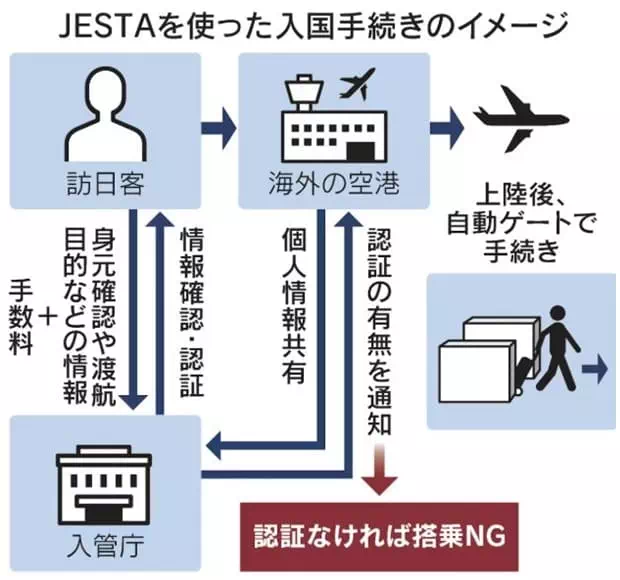
The core purpose of this system is to enhance border security, allowing the Japanese government to access travelers’ background information before they arrive, prevent potential security risks, screen for possible illegal overstays in advance, and thereby strengthen entry control.
Simultaneously, introducing an ETA system can expedite the immigration inspection process, as many checks are completed online beforehand. Travelers with an approved ETA will no longer need a stamp in their passport, can potentially pass through immigration counters more quickly, and may use automated gates, reducing queueing time.
Why is Japan introducing an ETA system?
The primary driver for Japan introducing an electronic travel authorisation system is its rapidly growing tourism industry. According to statistics, Japan welcomed over 42 million international visitors in 2025, a record high. Furthermore, the Japanese government has set a goal of attracting 60 million foreign tourists by 2030. Faced with such a massive influx of arrivals, traditional border management methods are becoming overwhelmed.
Therefore, implementing the JESTA system aims not only to alleviate congestion at airport immigration inspections and improve visitor satisfaction, but also to strike a balance between security and convenience. Through this system, Japan can conduct risk assessments before travelers board their flights, deny entry to potential inadmissible individuals, while allowing the vast majority of legitimate travelers to enjoy a smoother entry experience.
AD

II. Who needs to apply for JESTA?
According to current plans, the primary eligible individuals for Japan ETA are short-term visitors from visa-exempt countries or regions. While these travelers do not need to apply for a visa to enter Japan, they must obtain ETA authorisation before departure once the new system is implemented.
Currently, passport holders from approximately 74 countries and regions can enter Japan visa-free, including major sources of tourists to Japan such as the United States, Canada, the United Kingdom, Australia, Singapore, Malaysia, Thailand, Indonesia, South Korea, Taiwan, Hong Kong, France, and Germany.
Important points to note:
- Travelers from countries or regions that require a visa are not eligible for the ETA system; they must still apply for a visa through a Japanese embassy or consulate and do not need to apply for JESTA.
- Individuals planning to work, study, or stay long-term in Japan must still apply for the appropriate visa category and are not covered by the short-stay ETA.
III. How to apply for Japan ETA?
Although the official application portal has not yet been launched, based on similar systems in other countries and information released by Japan, the application process is expected to be straightforward and conducted entirely online.
Travelers will likely need to apply through the official website or a mobile app designated by the Japanese government. The basic steps may be as follows:
- Fill in personal details: Including name, gender, date of birth, nationality, and other personal information, along with passport details.
- Pay the application fee: The official fee hasn’t been announced yet, but media estimates suggest it could range from 1,500 yen to 4,000 yen, with 3,000 yen being a likely possibility.
- Wait for the screening result: Most applications are expected to be approved instantly, with a maximum processing time of 72 hours. Results will be sent via email, and applicants can check the status on the system.
- Receive authorisation: Once approved, the ETA will be electronically linked to the applicant’s passport number, eliminating the need to present it separately.
IV. Implementation Timeline and Validity
According to official statements, JESTA is targeted for implementation within the 2028 fiscal year (April 1, 2028, to March 31, 2029). The exact implementation date has not yet been determined.
Besides the implementation date and fee, the validity period of JESTA also remains undecided. Looking at countries that have already implemented ETA systems, validity typically ranges from 2 to 5 years. For example, the Korea K-ETA and the UK ETA are valid for two years, while the Canadian eTA is valid for five years. It is estimated that JESTA’s validity will very likely be set at two years, aligning with the period adopted by most countries.
V. What is the difference between JESTA and Visit Japan Web?
Visit Japan Web is an electronic entry declaration system introduced by the Japanese government. It allows travelers to submit immigration and customs declarations in advance before arrival, reducing the time spent filling out forms upon landing.
JESTA shares the same goal as Visit Japan Web in terms of improving entry efficiency, and much of the required information overlaps. However, their purposes, legal status, timing of use, and target audiences are fundamentally different.
Key Differences Between JESTA and Visit Japan Web
Simply put, JESTA is an entry permission determining “whether you can board the plane,” while Visit Japan Web is a “convenience tool for clearance procedures after landing.” Here is a comparison of the differences:
| Comparison Item | JESTA | Visit Japan Web |
|---|---|---|
| Core Purpose | Pre-inspection for immigration: Pre-screening individuals with potential illegal stay or security risks to strengthen border control. | Streamlining clearance procedures: Simplifying airport immigration inspection and customs declaration procedures, reducing paperwork and waiting times. |
| Legal Status | New “entry permission.” Airlines can legally deny boarding to passengers who have not obtained JESTA authorisation. | “Digital alternative” to existing declaration procedures. Replaces the paper-based “Embarkation Card for Foreigner” and “Declaration of Personal Effects and Unaccompanied Articles.” |
| Timing of Use | Mandatory application “before travel.” Must be obtained before departing for Japan. | Optional registration “before arrival.” Recommended to complete at least 6 hours before flight arrival to present the QR code upon entry. |
| Main Target | Exclusively for short-term visitors from visa-exempt countries/regions. Not applicable to travelers requiring a visa or Japanese nationals. | All individuals entering Japan, including Japanese nationals and all foreign travelers, regardless of visa requirement. |
| Core Function | Screen traveler backgrounds (occupation, purpose of visit, etc.) and grant “pre-approval for entry.” | Integrate information required for “immigration inspection” and “customs declaration” to generate a QR Code for on-site verification. |
| Implementation Status | Not yet implemented. The Japanese government passed the bill in March 2026, aiming for full implementation by the end of March 2029. | Already implemented. The service is currently operational, and travelers can register and use it anytime via the official website. |
In other words, even after JESTA is implemented, Visit Japan Web will likely continue to be used. However, due to the significant overlap in information required, there is a possibility that the two systems might be integrated after the new system launches. For example, travelers who have obtained JESTA might have their relevant data automatically imported into Visit Japan Web, reducing duplicate data entry.
Related Articles:
- Visit Japan Web (VJW) – Complete Guide to Japan Entry QR Code and Arrival Procedures
- UK ETA Application: A Detailed Guide and Tutorial on Process, Requirements, and Fees
- Korea Electronic Arrival Card (e-Arrival Card) Detailed Guide
- Taiwan Arrival Card (TWAC): Who needs to submit it? How to fill it out?
- Thailand Digital Arrival Card (TDAC) Filling Guide